
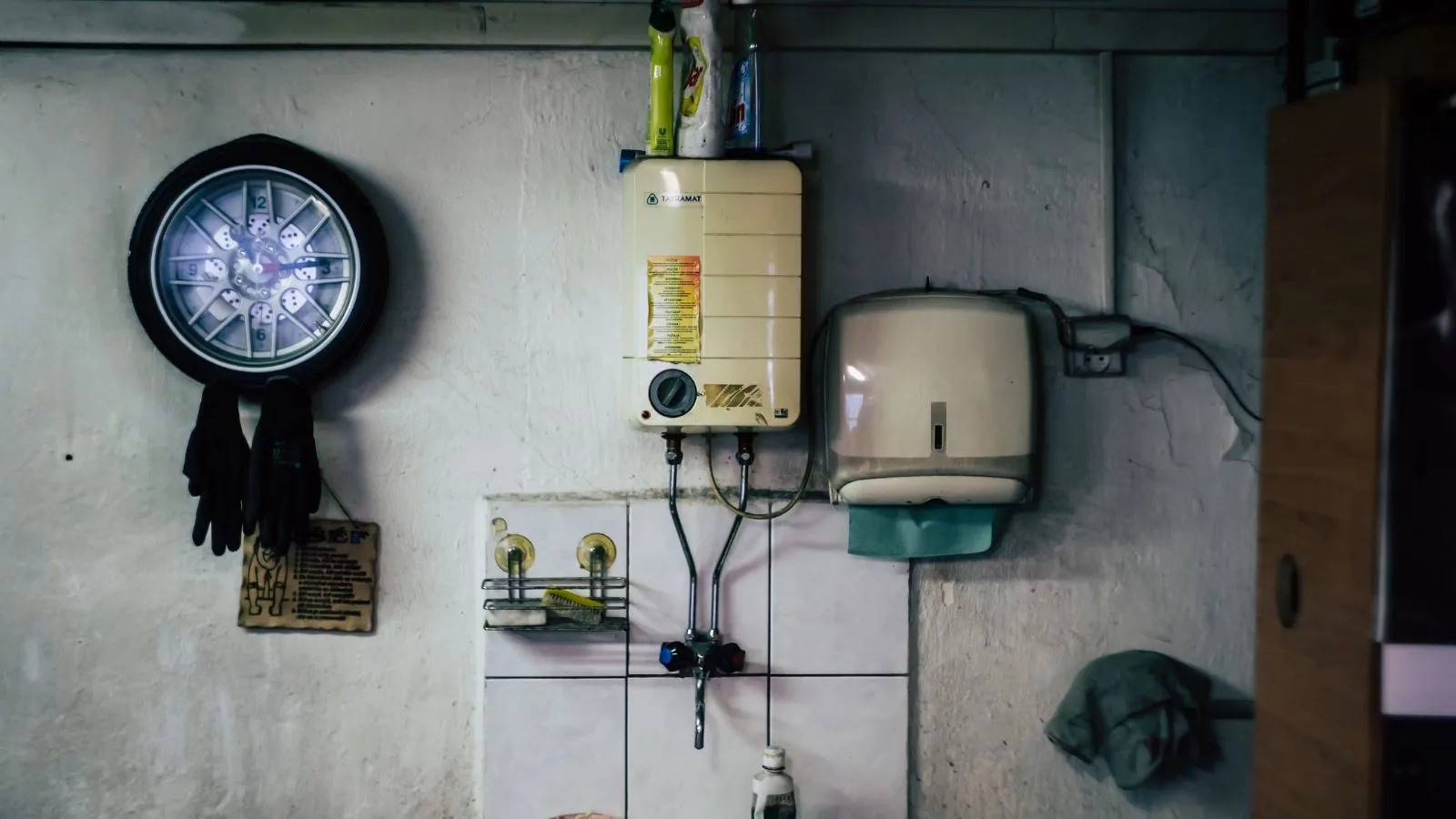
A water heater leak is stored hot water, usually 30 to 80 gallons, escaping from a failed tank, valve, or connection, and emergency water heater leak cleanup in Long Branch, NJ starts at the tank. The 24/7 line is open now. Turn off the cold water supply to the tank, then switch off electricity at the breaker for an electric unit or set a gas unit to pilot or off.
Do not step into standing water near a powered electric heater. If you smell gas, leave the home and call the gas utility or 911 first.
Water heater emergency: shut off the supply, power, and gas
Look for the cold-water inlet valve on top of the tank. Closing it stops new water from refilling a leaking tank. A drain valve at the bottom lets the tank empty into a bucket or floor drain once the power is off.
Stored water that is still hot can scald, and a failing pressure relief valve can spray. Stay back from the discharge pipe until the tank cools.
Where the water ends up
Heaters sit in basements, closets, garages, and attics, and each location has a different damage pattern. A basement unit floods the slab, drywall bottoms, and stored boxes. An attic or closet unit sends water through ceilings and into rooms below. Flexible connectors and temperature-pressure relief valves often fail before the tank does.
Crews extract the standing water, remove wet baseboard and the bottom of drywall if readings call for it, then run air movers and dehumidifiers. If the unit leaked slowly for months, hidden rot and mold may be present, which is why a moisture map matters more than the puddle you can see.
| Where the heater sits | Typical water path | Typical scope |
|---|---|---|
| Basement | Slab, walls, storage, finished-room carpet | Extraction, basement cleanup, drying |
| Utility closet or hall | Floor, adjoining rooms, wall base | Extraction, baseboard removal, wall drying |
| Garage | Slab and drywall edges | Extraction, drying, contents moved |
| Attic | Insulation, ceiling below, rooms underneath | Insulation removal, ceiling dry-out, framing drying |
If water is still spreading: before the crew arrives
Close the cold supply
Turn the inlet valve at the top of the tank off. If it will not turn, shut off the main water valve.
Cut power or gas
Breaker off for electric heaters, pilot or off for gas. Never rely on a wet panel.
Keep people back
Stay away from hot water and from standing water near a powered unit.
Photograph the unit
Record the tank label, the leak point, and the water on the floor for the claim.
A water heater that gave out overnight still gets a same-day answer. Call (732) 352-9660 and say where the unit sits and how far the water has spread.
Water heaters in Long Branch homes and rentals
Many homes and rentals near Broadway, in West End, and across the Route 36 corridor keep tanks in basements and closets where leaks go unnoticed for days. Tanks commonly last about a decade before corrosion shows, and a rusty base or damp floor beside the tank is the earliest warning.
If a water heater is replaced as part of the repair, plumbing work may require a permit through the Building and Development office at City Hall, 344 Broadway. Your plumber will know. A sump pit in a lower-level utility area should be checked as well, because a leaking tank can overwhelm a small pit.
What drives the cost of water heater leak cleanup
- Gallons releasedA slow weep is smaller than a ruptured tank.
- LocationBasement slabs dry differently than attics above living space.
- Materials affectedDrywall, trim, cabinets, and flooring near the unit.
- Drying daysEquipment and monitoring until readings are normal.
- Unit replacementThe plumber's repair or replacement is billed separately.
A sudden tank failure is often covered by homeowners insurance for the water damage, while the heater itself and damage from long-term leaks often are not. Check your policy and keep the failed unit's label and photos.
Scope and price are explained before work starts. For your number, Call (732) 352-9660.
According to the New Jersey Department of Banking and Insurance, you should photograph damage, keep receipts, and report promptly, and the same advice applies after a tank failure.
Water heater leak questions from Long Branch homeowners
Do you handle water heater leak emergencies at night or on weekends in Long Branch?
Yes. The line answers 24/7. Shut off the cold supply and power or gas first, then call. A dispatcher will ask where the tank sits and how much water has spread. Same-day response is offered when a crew is available.
Should I drain the tank myself?
Only after power is off and the water has cooled. The drain valve is at the bottom, and hot water can scald. If you are unsure, shut off the supply and call.
Does restoration replace the water heater?
No. A licensed plumber replaces or repairs the unit. Restoration extracts the water and dries the building. Schedule the plumber promptly so the area is not wet again.
How do I know if the leak was slow or sudden?
Rust streaks, a corroded base, and a musty smell suggest a slow leak. A pooled floor and a failed valve suggest a sudden one. The distinction can matter to your insurer, so photograph both the tank and the floor.