
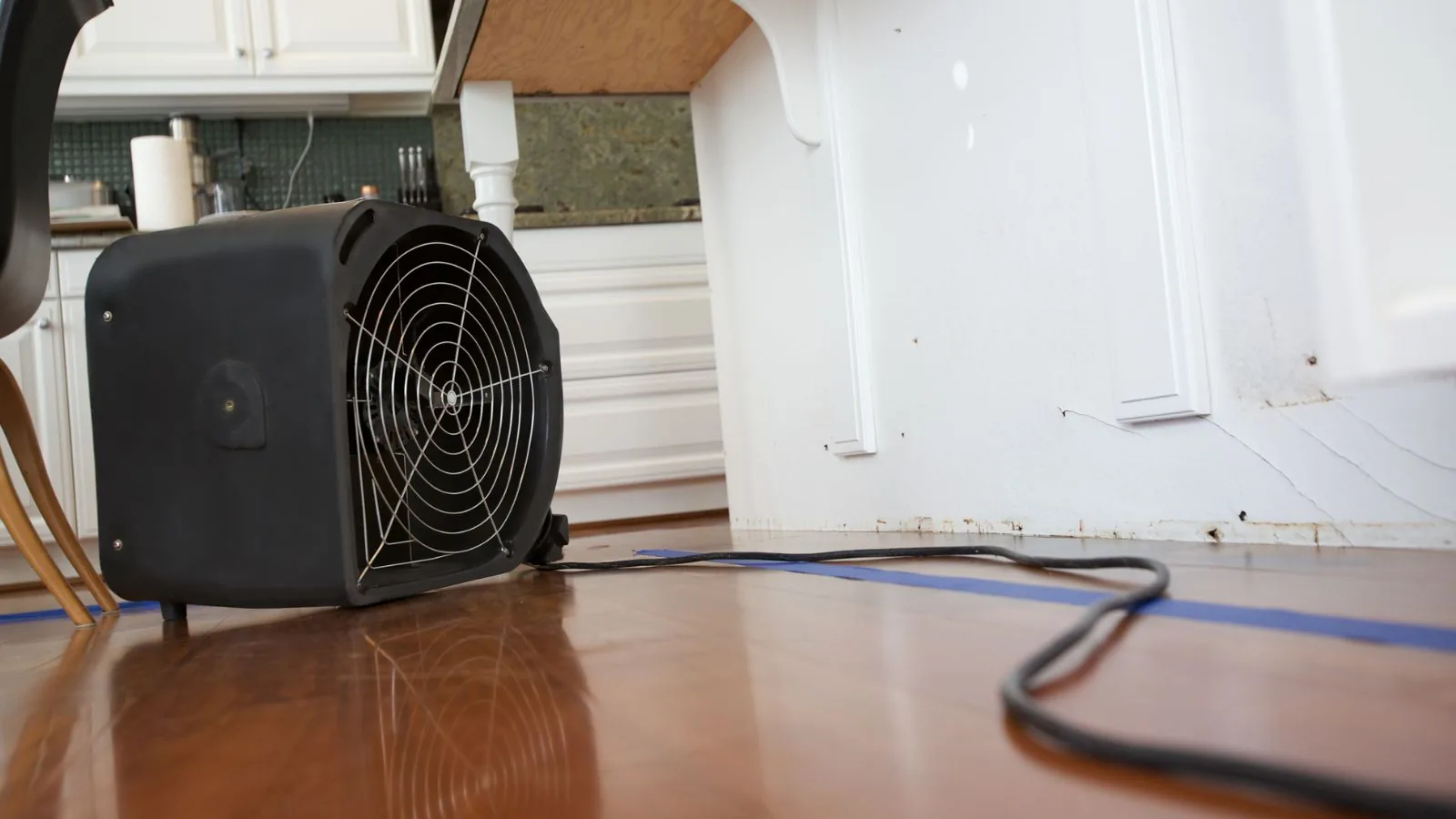
Kitchen water damage is moisture in cabinets, toe-kicks, countertops, and the floor around a sink, and kitchen water damage restoration in Long Branch, NJ starts with finding the full wet area. Water from a sink supply line, a dishwasher, or a refrigerator often runs under the cabinets, where it cannot be seen. Close the shutoff under the sink, empty the cabinet, and call.
Take photos before you move anything. Wet cabinet bases and particleboard swell fast, and early documentation helps with claims.
Where kitchen water goes
A sink leak drips onto the cabinet floor, wicks into the particleboard, and spreads under the toe-kick to the floor beneath. A dishwasher leak runs under the dishwasher and into adjoining cabinets and flooring. Solid wood cabinets tolerate water better than particleboard, but both can swell, delaminate, and hold moisture behind the finish.
Moisture meters and a thermal imaging camera show how far water traveled under cabinets and into the wall behind. This matters because many kitchen floors are tile or vinyl over a wood subfloor that holds water long after the surface dries.
| Part of the kitchen | How water affects it | Typical outcome |
|---|---|---|
| Base cabinets | Particleboard swells and delaminates | Often replaced if swollen, dried if solid wood |
| Toe-kick and trim | Absorbs water and traps moisture behind | Removed to dry the cabinet base |
| Countertops | Rarely affected unless water rose | Usually stay, laminate edges may swell |
| Floor beneath | Subfloor and underlayment hold water | Dried or replaced depending on readings |
How crews dry a wet kitchen
Crews remove the toe-kick and drill small ventilation holes if needed so air can reach the cabinet cavity. Air movers and a dehumidifier run across the floor and into the base. If particleboard is swollen or the drywall behind is wet, those sections are removed. The goal is to dry everything that can be saved and remove what cannot.
Failed appliances cause many kitchen leaks, and the appliance leak page covers dishwasher and refrigerator supply lines. Water that went into the floor is a matter for hardwood floor repair or tile and underlayment assessment, and wet walls follow the steps on the wall and drywall page.
A leak under the sink does not stop on its own. Call (732) 352-9660 and tell us what is wet and what you have already moved.
Kitchen leaks in Long Branch homes and condos
Many Long Branch homes and condos have older plumbing under the kitchen sink, and plastic supply lines and compression fittings fail with age. In condos near Pier Village and along Broadway, a leak under one sink can drip into the unit below, so notify the building manager as well.
Kitchen remodels and cabinet replacements may require a permit through the Building and Development office at City Hall, 344 Broadway, so ask before cabinets or walls are rebuilt. A reputable remodeler should confirm whether the work needs one.
What drives the cost of kitchen water damage restoration
- Cabinet materialSolid wood often dries, particleboard often must be replaced.
- Water reachUnder cabinets, into walls, or onto the floor below.
- FlooringTile, vinyl, hardwood, and laminate dry differently.
- Drying daysEquipment and monitoring until readings are normal.
- RebuildNew cabinets, countertops, and flooring are separate from drying.
A sudden kitchen leak is often covered by homeowners insurance, while a slow drip over months often is not. Read your policy, take photos of the source and the cabinets, and report promptly.
Scope and price are explained before work starts. For your number, Call (732) 352-9660.
The published S500 standard for professional water damage restoration describes how cabinets, subfloors, and wall cavities are tested for moisture, which is how hidden wet areas behind a kitchen sink are found.
Kitchen water damage questions from Long Branch homeowners
Can wet cabinets be saved?
Often if they are solid wood or dried quickly. Particleboard that has swollen or delaminated usually cannot be dried back to its original shape and is replaced.
Do I need to remove the toe-kick?
Usually yes. Water collects behind it, and air has to reach the cabinet base to dry it. It is replaced or reinstalled after drying.
Is it safe to keep using the kitchen?
Turn off the water to the leaking fixture and keep power off if wiring is wet. Avoid food storage on wet surfaces and call if the floor feels soft.
How long before mold can start under the sink?
Mold can begin in damp materials in about 24 to 48 hours. Dry the area quickly and ask for moisture readings if a musty smell remains.