
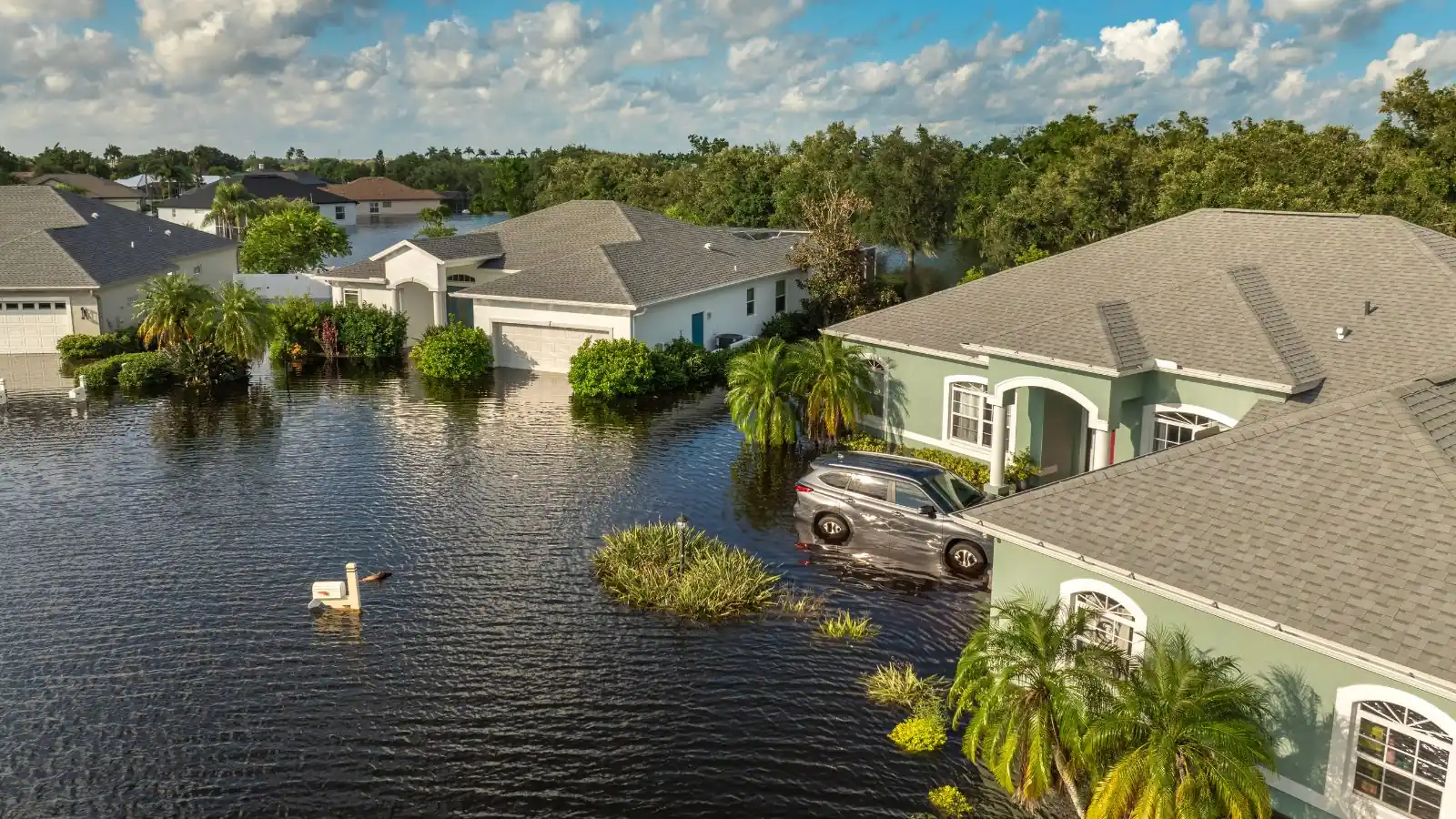
Storm water damage is water that enters a building through the envelope during a storm, including wind-driven rain, a torn roof, broken windows, and failed seals, and emergency storm water damage cleanup in Long Branch, NJ often follows a nor'easter or tropical system. The 24/7 line is open now. Move belongings away from the water, protect electronics, and call once it is safe.
Stay out of rooms with sagging ceilings and downed wires, and never drive or walk through flooded streets. Rising water belongs to flood damage, not storm intrusion.
When a storm leak is an emergency
Wind can drive rain sideways into window frames, under siding, and around chimneys, so water appears in places a normal rain does not reach. A torn roof section can let gallons into the attic in one afternoon. The longer insulation and drywall stay wet, the more likely they are to need removal, so same-day action matters.
A temporary tarp over a damaged roof or a board over a broken window protects the home, and many insurers expect homeowners to take reasonable steps to prevent more damage. Keep receipts.
| Storm entry point | What you notice | What crews dry or remove |
|---|---|---|
| Roof damage | Ceiling stains and attic dampness | Insulation, ceiling drywall, framing, see ceiling repair |
| Window or door failure | Wet sills, walls, and floors | Trim, drywall base, flooring |
| Siding or wall intrusion | Stains or bubbling on interior walls | Wall cavity, insulation, drywall |
| Chimney or vent | Stains around a flue or ceiling vent | Attic insulation, nearby framing |
If water is still coming in: before the crew arrives
Move belongings
Shift furniture, electronics, and papers away from drips and wet walls.
Protect the opening
Cover a broken window or roof section with a tarp or board only if it is safe to reach.
Stay clear of electrical
Leave breakers alone in wet rooms and call the utility for downed or sparking lines.
Photograph damage
Capture the roof, windows, and interior before cleanup for the insurance claim.
Storms and coastal weather in Long Branch
Long Branch sits on the Atlantic, so nor'easters and coastal storms hit with wind, rain, and tides together. The county hazard mitigation plan records flooding from Hurricane Sandy in North Long Branch in 2012 and notes that the city has since adopted a two-foot freeboard rule for new and subdivided properties. Shore-facing homes and condos near Pier Village take wind-driven rain on their most exposed walls.
Salt air also wears sealants and flashing, so small gaps open over time and a storm finds them. After a major storm, inspect windows, flashing, and attic hatches, and call a roofer for repairs while restoration dries the interior. Basement intrusion after a storm is covered under basement water damage.
A storm leak at night still gets a same-day answer when a crew is available. Call (732) 352-9660 and say where the water came in.
What drives the cost of storm water damage cleanup
- Entry points and roomsMore openings usually mean more rooms to dry.
- Time wetWater left a day or two reaches farther into materials.
- MaterialsInsulation, drywall, flooring, and trim each dry or are replaced differently.
- Drying daysEquipment and monitoring until readings are normal.
- Envelope repairRoof, window, and siding repair are separate trades.
Wind and rain damage that enters through a storm-created opening is often covered by homeowners insurance, while flood damage is usually excluded and needs separate flood coverage. Read your policy and report promptly with photos.
Scope and price are explained before work starts. For your number, Call (732) 352-9660.
According to the FEMA Flood Map Service Center, flood zones are mapped by address, and the New Jersey Department of Banking and Insurance notes that flood damage is excluded from homeowners policies.
What to do before a crew arrives
- Stay out of rooms with water near live wiring and call the utility about downed lines.
- Do not walk or drive through moving water.
- Move valuables to higher shelves and photograph the damage.
- Cover openings only if you can do so safely from the inside.
Storm history differs across the city, and the pages for Elberon and West End cover what each area has seen.
Storm damage questions from Long Branch homeowners
Do you handle storm water damage emergencies at night or on weekends in Long Branch?
Yes. The 24/7 line is open during storms and after them, including nights and weekends. Demand is higher after a major event, so a crew may take longer. Same-day response is offered when a crew is available.
Is storm damage the same as flood damage?
No. Storm damage is water entering through the roof, windows, or walls. Flood damage is water rising from outside. Insurance treats them differently, and flood is usually excluded from homeowners policies.
Should I tarp the roof myself?
Only if it is safe and dry. A roofer or the restoration crew can place a temporary cover. Do not climb onto a wet or damaged roof.
How long do I have to report storm damage?
Report it as soon as possible. Your policy sets the exact terms, and the New Jersey Department of Banking and Insurance advises policyholders to report claims promptly and document damage with photos.