
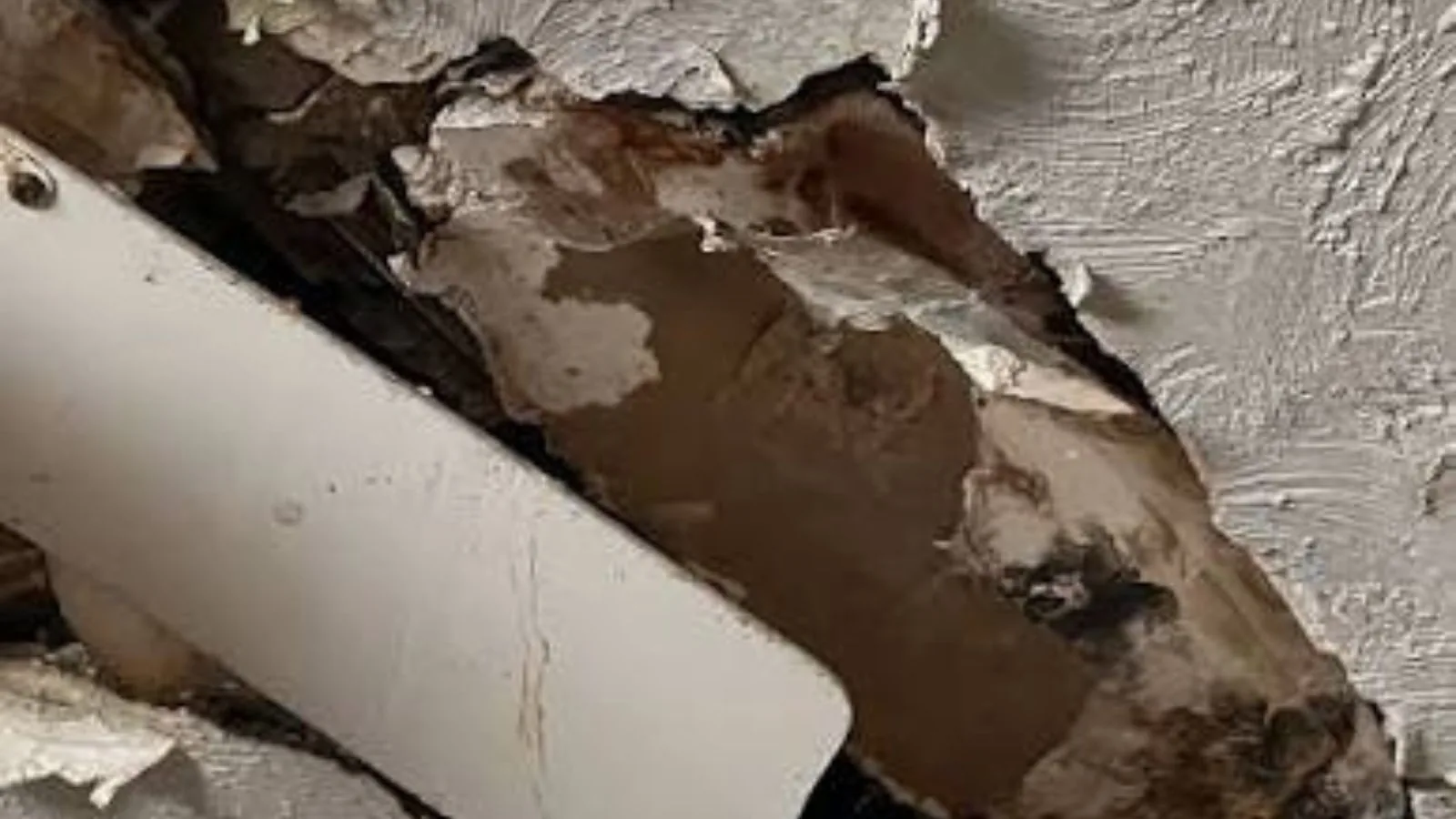
Wall and drywall water damage is moisture in gypsum board, paint, baseboards, and the insulation behind them, and wall and drywall water damage repair in Long Branch, NJ starts with measuring how far the water went. Bubbling paint, a soft spot, stains that bloom after drying, and a musty smell are the signs. Stop the source, then call.
Do not scrape or paint a wet wall. Painting over wet drywall seals moisture inside and the stain usually returns.
How water behaves in a wall
Drywall wicks water upward like a paper towel, so a leak at the floor can raise the wet line a foot or more. Water also runs down inside the cavity and soaks insulation and the bottom plate. Paper-faced drywall that stays wet grows mold on the paper, and the damage often shows up days after the leak.
Crews use a moisture meter and a thermal imaging camera to find the wet area without opening the whole wall. A probe or small inspection hole confirms what is inside the cavity.
| What you see | What it usually means | Typical outcome |
|---|---|---|
| Bubbling or peeling paint | Moisture behind the paint film | Dry, then repaint if the board is sound |
| Soft or crumbling drywall | Board has lost strength | Cut out and replace |
| Stain that spreads or returns | Source still active or wet insulation | Open, dry, and fix source |
| Wet baseboard and swollen trim | Water at the floor edge | Remove trim, dry cavity, reinstall or replace |
Walls: flood cuts, insulation, and baseboards
A flood cut is a horizontal cut a few inches above the highest wet reading, removing the lower part of the wall so the cavity can dry. It is common after floods and after pipe leaks that wet the bottom of the wall. Wet insulation is removed because it holds water, and the framing is dried with air movers.
Baseboards come off so air can reach the cavity. New drywall is hung, taped, finished, and painted once readings are normal. Water that came through the ceiling is covered under ceiling water damage repair, and a burst line in the wall is covered on the burst pipe page.
Walls near a tub or exterior wall can stay damp for weeks, and the mold remediation page explains what happens if growth appears. Drying principles are on the structural drying page.
A wall that looks fine can still be wet inside. Call (732) 352-9660 and describe the stain and where it sits.
Walls in Long Branch homes
Older Long Branch homes in Elberon and West End often have plaster and lath or multiple coats of paint, which hold moisture differently than modern drywall. Newer condos and apartments use thin drywall on metal or wood studs, and a leak in one unit often wets a shared wall.
In an older home, lead paint may be present on walls and trim, which affects how demolition is done. Ask the crew how they handle older painted surfaces. Larger wall rebuilds or structural framing repairs may require a permit through the Building and Development office at 344 Broadway.
What drives the cost of wall and drywall water damage repair
- Wet area height and lengthWicking can raise the wet line well above the leak.
- Wall typePlaster, drywall, and paneling each dry or are replaced differently.
- Insulation and framingWet insulation removal and stud drying add scope.
- Drying daysEquipment and monitoring until readings are normal.
- Finish workTaping, texture, paint, and trim are separate from drying.
Sudden leaks that damage walls are often covered by homeowners insurance, while gradual seepage often is not. Read your policy, photograph the wall before opening it, and report promptly.
Scope and price are explained before work starts. For your number, Call (732) 352-9660.
The published S500 standard for professional water damage restoration describes testing drywall and the cavity behind it with moisture meters, which is why surface dryness is never treated as proof.
What to do before a crew arrives
- Do not cut into a wall near wiring or a wet outlet.
- Move furniture away from wet walls and lift rugs.
- Open a window for air if the weather allows.
- Mark the edge of any stain with a pencil and a date, so growth can be tracked.
Wall and drywall questions from Long Branch homeowners
Can wet drywall be dried instead of replaced?
Sometimes. If the board is firm, the water was clean, and readings fall quickly, drying in place can work. Soft, crumbling, or moldy drywall is replaced.
Why cut the wall above the stain?
Water wicks upward and runs behind the board, so the wet area is usually larger than the stain. A cut above the highest reading exposes the cavity.
Do I need to remove insulation?
Wet insulation holds water and dries slowly, so it is usually removed. Closed-cell foam may be dried and kept.
How soon can I repaint?
After readings show the wall is dry and the source is fixed. Painting early traps moisture.