
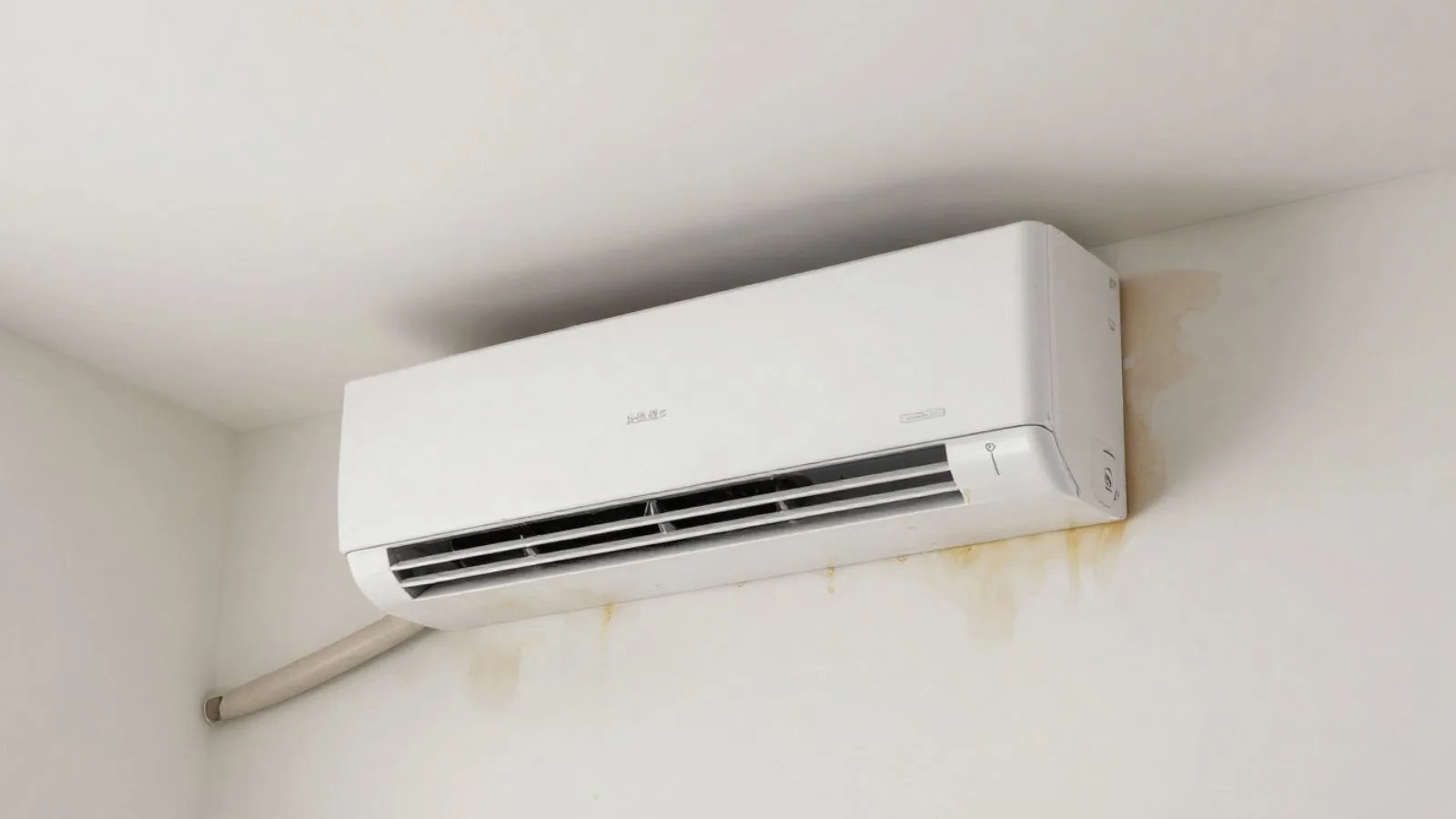
AC leak water damage is moisture from an air conditioner's condensate drain, drain pan, or coil that escapes into the ceiling, wall, or floor around the unit, and in Long Branch, NJ it usually shows up as a stain near an air handler or a vent. Turn the system off at the thermostat to stop making more condensate, then call to have the wet area found and dried.
Do not keep running a unit that is leaking onto a ceiling. The water has to go somewhere, and a saturated ceiling can fail.
Why air conditioners leak
Cooling coils pull water out of the air, often a gallon or more per hour on a hot, humid day, and that water exits through a drain line. When the line clogs with algae or debris, the drain pan overflows and the water finds the nearest ceiling, wall, or floor. Cracked drain pans, loose fittings, and frozen coils produce the same result.
Ductless mini-split units leak when the drain hose sags or the unit is not level. Both show up as drips on the wall or floor beneath the indoor head.
| Where the unit sits | Typical sign | What gets wet |
|---|---|---|
| Attic air handler | Brown stain on the ceiling below | Insulation, ceiling drywall, framing |
| Closet or hall air handler | Damp carpet or a soft floor near the closet | Flooring, baseboard, subfloor |
| Wall-mounted mini-split | Drips or a stain under the indoor head | Wall, trim, floor |
| Window or portable unit | Water on the sill or floor | Sill, wall base, floor |
How the leak is dried and the mold risk handled
A technician clears the drain line and repairs the pan, and restoration finds how far the water spread. Crews use a moisture meter and a thermal imaging camera, then dry insulation, drywall, and framing with air movers and a dehumidifier. If a ceiling is stained or sagging, the work overlaps with ceiling water damage repair.
Condensate leaks are often slow, so the same spot can stay damp for weeks. That is why a musty smell near a vent is worth a moisture reading, and why the mold remediation page explains how testing and removal work if growth is already present.
Cooling-season leaks in a humid coastal city
Summers near the Jersey Shore are humid, so condensate production is high. Units that sit idle over winter collect debris in the drain, and the first heavy cooling days of the year are when clogs show up. Homes with attic air handlers carry the highest ceiling risk.
A yearly drain-line flush before the cooling season is one of the cheapest ways to avoid this. Ask your HVAC technician about a float switch that shuts the unit off if the pan fills, and check that the pan itself is not rusted through. If you rent in Long Branch, report any stain to the landlord in writing and keep photos.
A stain near an air handler is easier to treat early. Call (732) 352-9660 and describe where the unit and the stain are.
Wall and trim damage near a mini-split belongs with wall and drywall water damage, and a long-running leak that also dampened insulation is a case for structural drying with monitoring.
What drives the cost of AC leak cleanup
- Time the leak ranA short overflow is smaller than weeks of drip.
- LocationAttic leaks reach insulation and ceilings. Floor leaks reach subfloor.
- Materials wetInsulation, drywall, and trim are dried or replaced.
- Drying daysEquipment and monitoring until readings are normal.
- HVAC repairThe drain, pan, or coil repair is the technician's bill, not restoration's.
Insurers often treat sudden AC overflow differently from long-term drips, and gradual leaks are often excluded. Read your policy and photograph the unit, the drain, and the stain before repairs.
Scope and price are explained before work starts. For your number, Call (732) 352-9660.
The published S500 standard for professional water damage restoration describes using moisture readings to confirm drying, which is how a slow drain pan leak is checked for hidden dampness.
AC leak questions from Long Branch homeowners
Can I keep running the AC if it leaks?
Turn it off until the drain is cleared. A running unit keeps making water, and it will drain into the same spot. Run a fan or open windows if you must keep the room comfortable.
How do I tell condensate from a roof leak?
Condensate stains appear near the unit or a vent and show up on hot, humid days. Roof leaks follow rain. If you are unsure, a technician can trace the path and a moisture reading will show where the water is.
Does the ceiling have to come down?
Not always. If the drywall is stained but intact and dry readings are reached, it can be repaired in place. A bulge or sag usually means the drywall must be opened or replaced.
Will mold grow from an AC leak?
It can if materials stay damp beyond a day or two. Prompt drying lowers the risk, and a musty smell after the repair is a reason to ask for readings.