
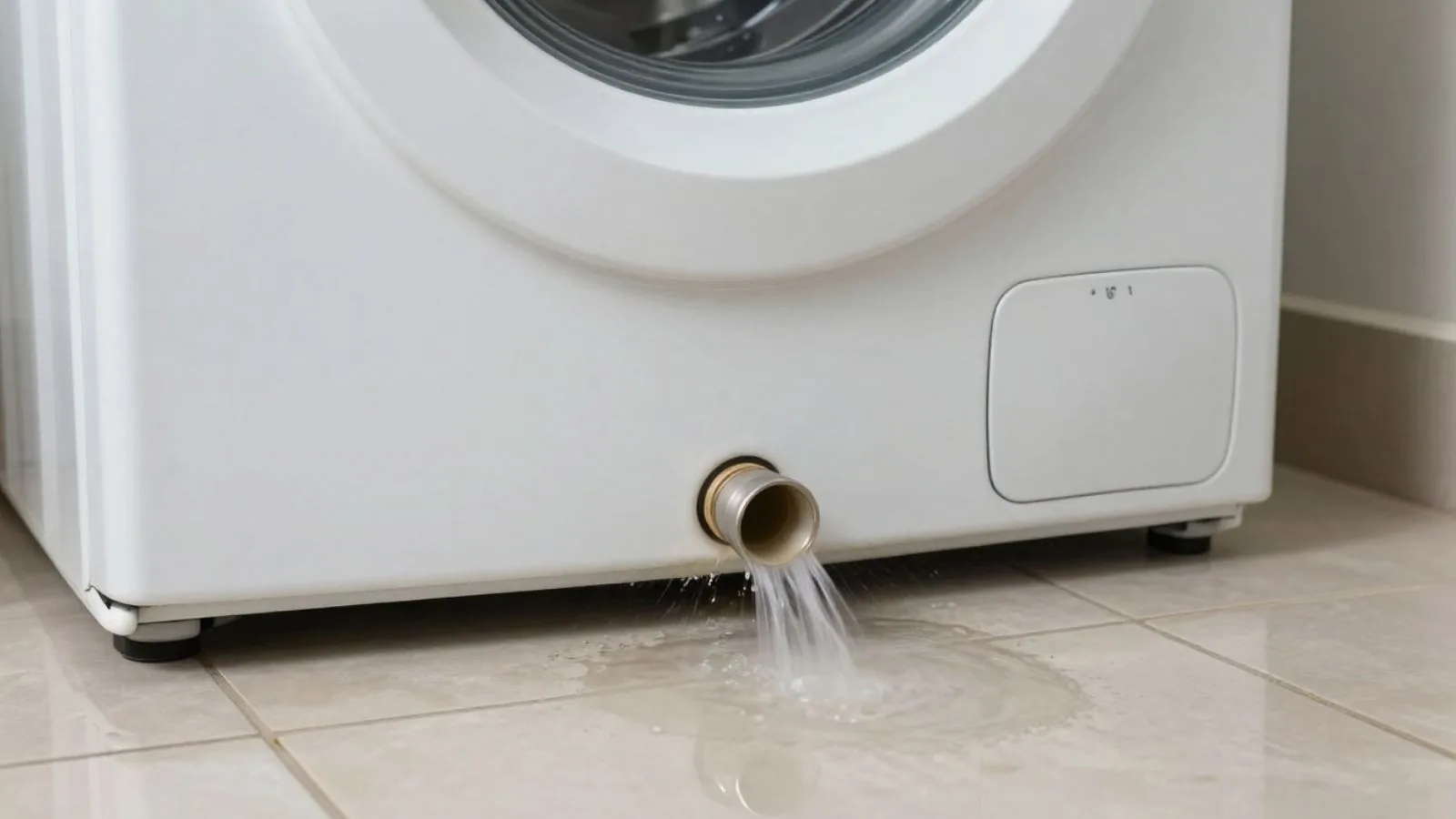
An appliance leak is water escaping from a washing machine, dishwasher, refrigerator ice-maker line, or similar fixture, and emergency appliance leak water damage in Long Branch, NJ often hides under flooring before anyone sees it. The 24/7 line is open now. Shut off the fixture's supply valve, unplug the appliance only if the floor is dry, and call.
If the appliance is on a wet floor, leave it plugged in and shut off the breaker from a dry spot. Never reach behind a wet appliance.
Appliance leak emergency: supply valve first
Washers have two supply valves on the wall behind them, dishwashers have a stop valve under the sink, and refrigerators with ice makers have a small line behind or beneath. Closing the right valve ends the flooding in seconds. A burst washer hose can release hundreds of gallons an hour, so do not wait to see whether it slows.
Once water stops, a wet-dry extraction removes pooling from flooring, and the crew checks adjacent walls and cabinets.
The slow appliance leaks no one notices
Many appliance leaks are drips, not floods. A failing drain hose, a loose fitting, or a cracked supply line can leak into a subfloor for weeks. The first sign is often a soft floor, a musty smell, or a stain on the ceiling below. By then, moisture has usually spread beyond the visible area.
A moisture meter and a thermal imaging camera find the full wet footprint. When the leak was long-standing, hidden mold becomes a question, and the mold remediation page explains the testing and removal steps.
| Appliance | Common failure | Where water goes |
|---|---|---|
| Washing machine | Supply hose burst, drain hose popped off | Floor, adjacent walls, floor below |
| Dishwasher | Door gasket, inlet valve, or hose | Under-sink cabinet, kitchen floor, subfloor |
| Refrigerator with ice maker | Small supply line cracked or loose | Behind the unit, under hardwood or tile |
| Dehumidifier, humidifier, softener | Full tank, drain line, or fitting | Basement slab, nearby finished areas |
If water is still spreading: before the crew arrives
Close the supply valve
Find the valve behind or beside the appliance and turn it fully off.
Stay out of the electrical path
Unplug only if you are standing on a dry surface. Otherwise shut off the breaker.
Pull the unit if you can
If it is safe, slide the appliance away from the wall so crews can reach the floor behind it.
Take photos
Capture the failed hose, the wet floor, and the appliance label for the claim.
An overnight washer flood is still a same-day job. Call (732) 352-9660 and tell us which appliance failed and which floor it is on.
Kitchen and laundry leaks need different follow-up. If the failure was at the sink area or cabinets, the kitchen water damage page explains cabinet toe-kicks and base cabinets. Water that went into a wood floor is handled on the hardwood floor page, and carpet and pad are covered under carpet water damage.
In Long Branch apartments and condos, laundry is often on an upper floor. A burst hose there can reach units below within minutes, so tell the building manager and your insurer right away. Water that reached a neighbor's unit is typically a liability question, and your lease or association rules may apply.
What drives the cost of appliance leak cleanup
- Time the leak ranA short flood and a weeks-long drip are different scopes.
- Floor type underneathHardwood, laminate, tile, and carpet dry or are replaced in different ways.
- Cabinets and walls reachedBase cabinets and baseboards often need removal or drying.
- Floors below affectedWater that dripped through a ceiling adds scope in the unit below.
- Drying daysEquipment time depends on wet material and humidity.
A sudden hose or valve failure is often covered by homeowners insurance, while a long, slow leak often is not. Read your policy, photograph the failed part, and report promptly.
Scope and price are explained before work starts. For your number, Call (732) 352-9660.
According to the New Jersey Department of Banking and Insurance, sudden leaks from appliances are often covered after the deductible, while long-term seepage is often excluded.
What to do before a crew arrives
- Close the appliance's supply valve or the main shut-off.
- Unplug the appliance only if the cord and the floor around it are dry.
- Do not step into water that touches outlets or power strips.
- Photograph the appliance label and the damage.
Appliance leak questions from Long Branch homeowners
Do you handle appliance leak emergencies at night or on weekends in Long Branch?
Yes. The line answers 24/7. Close the supply valve first, then call. Tell the dispatcher which appliance failed and whether the water has reached another floor. Same-day response is offered when a crew is available.
Can I run the appliance again after the leak?
Not until the part that failed is replaced. Run it only after a plumber or technician confirms the supply and drain lines are sound.
Is mold likely after a washer leak?
It can be if the floor stayed damp beyond a day or two. Quick extraction and drying lower the chance. If a musty smell remains, ask for moisture readings.
Will my insurer cover the appliance?
Usually not the appliance itself. Policies often cover the resulting water damage if the leak was sudden. Ask your insurer how they treat appliance failure.