
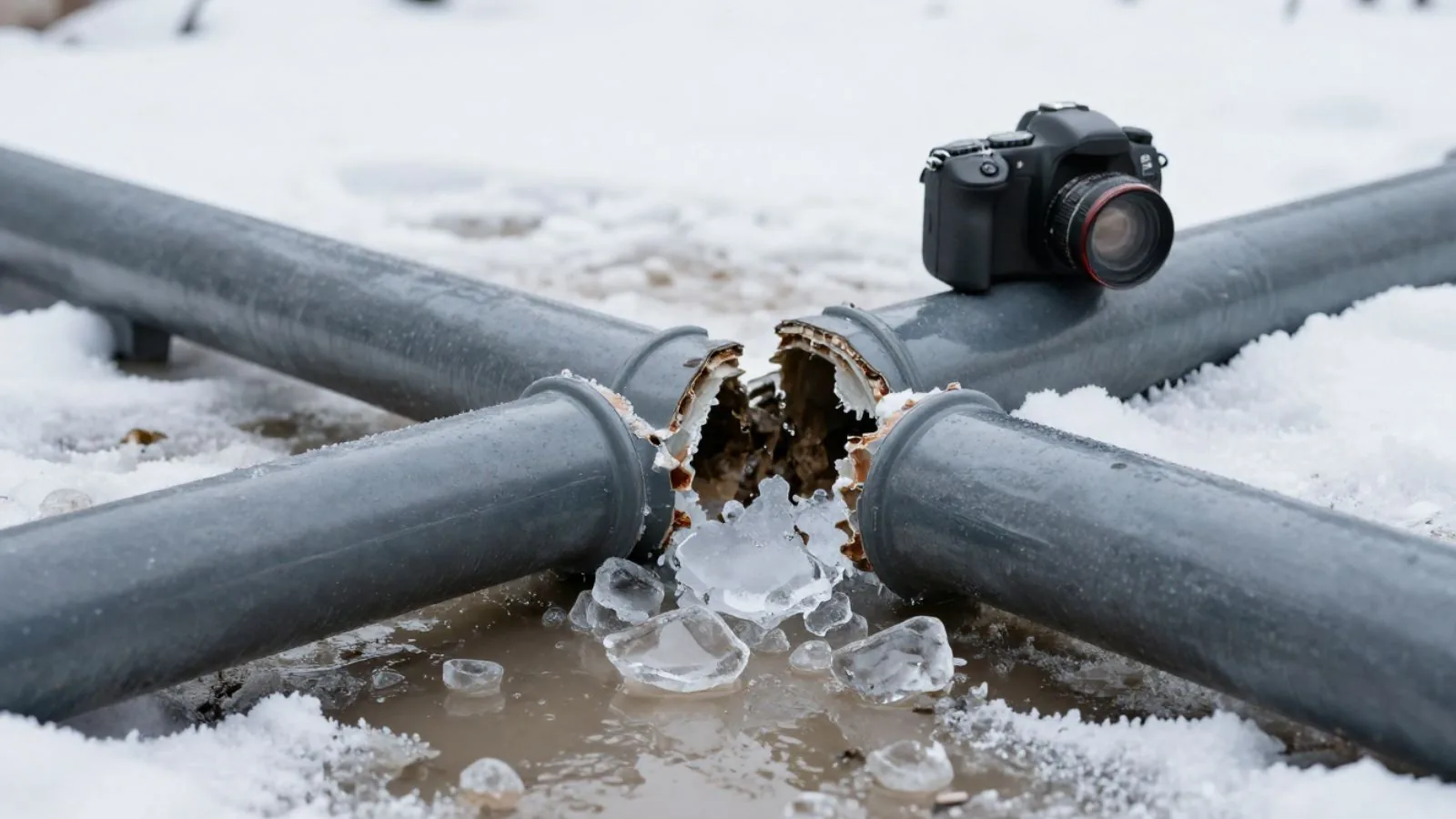
A frozen pipe is dangerous because the damage often shows up hours after the freeze. Ice swells inside the line and can split it, and the water only escapes once the pipe thaws, which is why emergency frozen pipe water damage in Long Branch, NJ often appears the morning the weather warms. The 24/7 line is open now. If a pipe is frozen but not yet leaking, keep the heat on and open the faucet slightly.
If you see water, shut off the main valve, keep power off in wet areas unless the panel is dry, and call. Do not use a torch or open flame to thaw a line.
Frozen pipe emergency: thaw safely, then check for splits
Warm a frozen section gradually with a hair dryer or warm towels while the faucet is open, starting near the faucet and working back toward the frozen spot. Water flowing normally again does not prove the pipe is sound, because a split can hide behind a wall. Watch the ceiling and baseboards for the first few hours after thawing.
Pipes in exterior walls, unheated garages, crawl spaces, and attic runs freeze first. In Long Branch, bay windows, enclosed porches, and older additions are common weak spots.
Why thaw leaks look different from other leaks
A frozen pipe usually splits along a seam, so the leak sprays outward from one spot rather than weeping. Once the ice melts, water can run for a long time before anyone notices, especially if the home was empty over a cold weekend. That is how a single split can soak insulation, a ceiling, and a floor below.
Compare it with a general burst pipe, where pressure alone causes the failure. With a frozen pipe the repair has two parts, fixing the split and fixing why it froze, and the damage can reach the ceiling below or the wall around the pipe before anyone sees a drip.
| Where it froze | Warning sign before the leak | What water usually reaches |
|---|---|---|
| Exterior wall | Faucet slows to a trickle in a cold snap | Wall cavity, baseboard, and floor beneath |
| Unheated garage or utility room | Frost on the pipe, no water at a fixture | Slab, stored belongings, drywall |
| Attic or ceiling run | Ice or frost on exposed lines | Ceiling below, insulation, light fixtures |
| Crawl space or under floor | Cold floors near the pipe path | Insulation, subfloor, floor joists |
If water is still spreading: before the crew arrives
Shut off the main
Close the main water valve and drain the line by opening the lowest faucet.
Keep heat on
Set the thermostat to a steady, warm setting so remaining ice in other pipes melts slowly and evenly.
Stay clear of electrical
Leave breakers alone if the floor is wet, and stay away from ceiling lights that are dripping.
Document the thaw
Photograph the split, the wet areas, and any ice you find. Save the split section if a plumber replaces it.
Freeze damage in a coastal city
Long Branch winters are moderated by the Atlantic, but a hard cold snap or a nor'easter with wind can still push temperatures low enough to freeze exposed lines for a day or two. The risk rises in seasonal homes and rentals that sit empty, where a heat setting that is too low for a few days is all it takes.
If you own a second home or shore rental near Pier Village or West End, leave the heat on a safe setting, open cabinet doors under sinks on exterior walls, and ask a neighbor to check in during a cold snap. A split in an empty house can run for days before it is found.
A freeze leak found on a Sunday morning is still a same-day problem. Call (732) 352-9660 and tell us where the pipe froze and which rooms are wet.
What drives the cost of frozen pipe damage
- Time the water ranA split found within the hour is smaller than one found after a weekend away.
- Number of splitsFrozen lines often fail in more than one place.
- Hidden wet areasWater in wall cavities and ceilings adds drying and opening scope.
- Materials affectedInsulation, drywall, and flooring each carry different removal and drying needs.
- Repair and rebuildPlumbing and finish work are separate from water mitigation.
Freeze damage from a sudden pipe failure is often covered by homeowners policies, though some policies attach conditions about heat being maintained in vacant homes. Read your policy or ask your insurer, and photograph everything before cleanup.
Scope and price are explained before work starts. For a number on your own loss, Call (732) 352-9660.
According to the New Jersey Department of Banking and Insurance, you should report a claim as soon as possible and keep photos and receipts, which matters after a freeze split.
Frozen pipe questions from Long Branch homeowners
Do you handle frozen pipe emergencies at night or on weekends in Long Branch?
Yes. The line answers 24/7, including during cold snaps and holiday weekends. Say whether the pipe is only frozen or already leaking. A leaking line needs the main valve shut right away, and the dispatcher can help you find it.
Is it safe to thaw a frozen pipe myself?
A hair dryer or warm towels with the faucet open is the safe method. Never use a torch, a heat gun on plastic, or any open flame. If you cannot reach the frozen section, or you see a split, shut off the main and call a plumber and restoration.
Will my pipe burst again next winter?
It can if the cause is not fixed. Ask your plumber about insulating exposed lines, sealing drafts at the wall, and what heat setting to keep in empty rooms and garages.
The water stopped. Do I still need drying?
If water reached a wall, ceiling, or floor, yes. Moisture hides in cavities and insulation long after the visible puddle is gone, and a moisture meter reading is the only reliable check.