
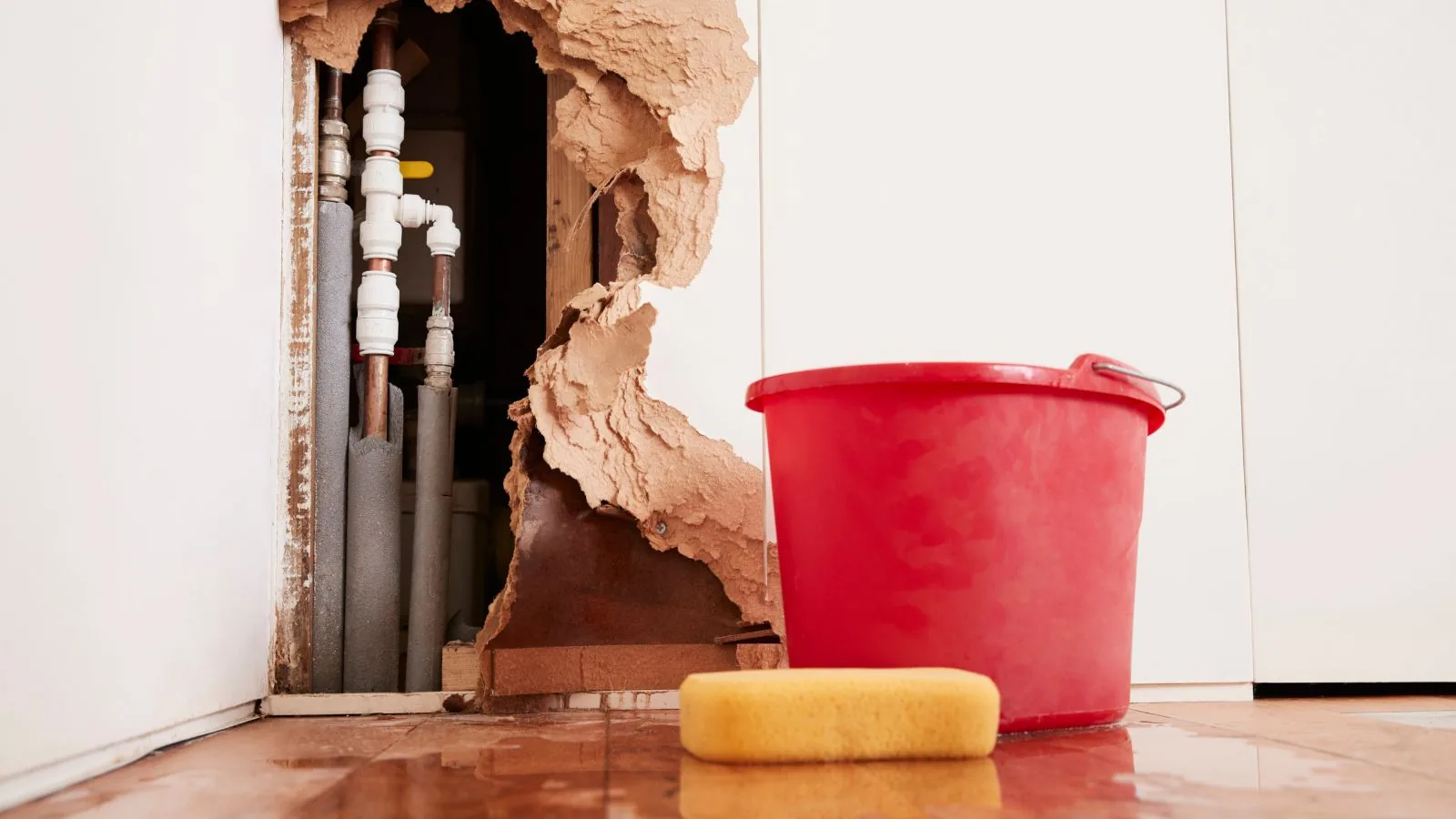
A burst pipe sends pressurized water into walls, ceilings, and floors at several gallons a minute, so burst pipe water damage in Long Branch, NJ gets worse every minute the valve stays open. Close the main water valve first. Then open a low faucet to drain the line, keep power off in wet areas unless the panel is dry, and call the 24/7 line.
Our crews pick up from there: extraction, moisture mapping, and drying. You do the one thing only you can do, which is stopping the flow.
Burst pipe emergency: shut off the water first
In most Long Branch homes the main shut-off sits where the supply line enters, often in a basement, utility closet, or garage. The city's drinking water comes from New Jersey American Water, and the valve at the street belongs to the utility. If you cannot find or turn your interior valve, call the utility's emergency line and tell the restoration dispatcher you did.
Never touch an outlet or panel while standing in water. If water is dripping through a light fixture, stay clear of that room and shut off the breaker only from a dry spot.
Where a burst pipe hides the damage
The leak you see is rarely the whole story. Water follows studs and pipe chases, so a burst line in an upstairs bathroom can soak the kitchen ceiling below. Crews use a moisture meter and a thermal imaging camera to trace the wet path, then cut small inspection openings only where readings call for it.
Insulation and drywall that soaked through are usually removed because wet cavity insulation dries slowly. Hardwood, laminate, and carpet are assessed separately, and the kitchen water damage page and the wall and drywall page cover those materials in detail.
| Cause of the burst | What you usually notice | What the fix involves |
|---|---|---|
| Frozen pipe that split | Water appears after a thaw, often on exterior walls | See frozen pipe damage for the thaw-and-split pattern |
| Aging or corroded supply line | Pinhole spray, a wet spot that grows, hissing in the wall | Plumber repairs the line, restoration dries the cavity |
| Failed fitting or connector | Sudden spray at a joint, often under a sink or at a toilet | Quick shut-off, short drying job if caught early |
| Pressure surge or damaged line | Loud bang, water in more than one room | Larger extraction and wider drying scope |
If water is still spreading: before the crew arrives
Close the main valve
Turn the main shut-off clockwise until it stops, then open the lowest faucet to drain the line.
Protect the electrical system
Leave breakers alone if the floor is wet. Call the utility or 911 for any sparking, buzzing, or burning smell.
Catch and redirect
Place buckets under ceiling drips and puncture a sagging ceiling bubble only if you can do it from a dry spot, letting water drain into a bucket.
Photograph first
Take wide and close photos of the burst, the wet areas, and damaged belongings before anything is moved.
A pipe that burst after midnight still gets a same-day answer. Call (732) 352-9660 and say where the shut-off is and which rooms are wet.
Burst pipes in Long Branch's older homes and condos
Long Branch has a wide mix of housing, from Elberon's large older homes to beachfront condos near Pier Village and apartments along Broadway. Older supply lines and fittings fail more often than new copper or PEX. In multi-unit buildings, one burst can drip into the unit below, which means more than one insurance claim and more than one set of moisture readings.
If the burst happens in a condo or rental, tell the property manager at once and ask for water to be shut off to the building riser. Structural repairs inside walls may require a permit through the city's Building and Development office at City Hall, 344 Broadway, so keep that in mind before closing walls back up.
What drives the cost of burst pipe cleanup
- How long water ranMinutes of flow and hours of flow are very different jobs.
- Rooms and levels reachedWater that traveled down a wall to a lower floor adds scope.
- Materials affectedDrywall, insulation, hardwood, and cabinets dry or are replaced differently.
- Drying days and equipmentAir movers, dehumidifiers, and monitoring visits scale with the wet area.
- RebuildReplacing drywall, paint, and trim is separate from mitigation.
A sudden burst is the kind of event homeowners policies often cover, while slow leaks from long-neglected lines often are not. Check your policy, report the claim promptly, and keep the failed pipe section if the plumber removes it.
Scope and price are explained before work starts. For a number on your own loss, Call (732) 352-9660.
According to the New Jersey Department of Banking and Insurance, homeowners policies often respond to sudden discharge but exclude flood, so read your policy and report a loss promptly.
What to do before a crew arrives
- Close the main shut-off and open a low faucet to drain the line.
- Turn off the water heater so the tank does not run dry.
- Stay out of rooms where water is near outlets or the panel.
- Lift small items off wet floors and photograph the damage.
Burst pipe questions from Long Branch homeowners
Do you handle burst pipe emergencies at night or on weekends in Long Branch?
Yes. The emergency line answers 24/7, and a burst pipe is exactly the kind of call it exists for. Shut off the main valve first, then call. Tell the dispatcher which rooms are wet and whether any water has reached the panel. Same-day response is offered when a crew is available.
Do I call a plumber or a restoration company first?
Stop the water, then call both. A plumber repairs the pipe, and restoration handles the water that is already in the building. Calling restoration quickly keeps wet drywall and flooring from turning into mold in the days that follow.
How long does drying take after a burst pipe?
Many jobs run three to five days of equipment, but wet cavities, hardwood, and thick materials can run longer. Moisture readings on the drying log decide when equipment comes out, not the calendar.
Can the pipe burst again after drying?
The restored area is only as safe as the repair. Ask your plumber what caused the failure and whether other lines of the same age or type are at risk.