
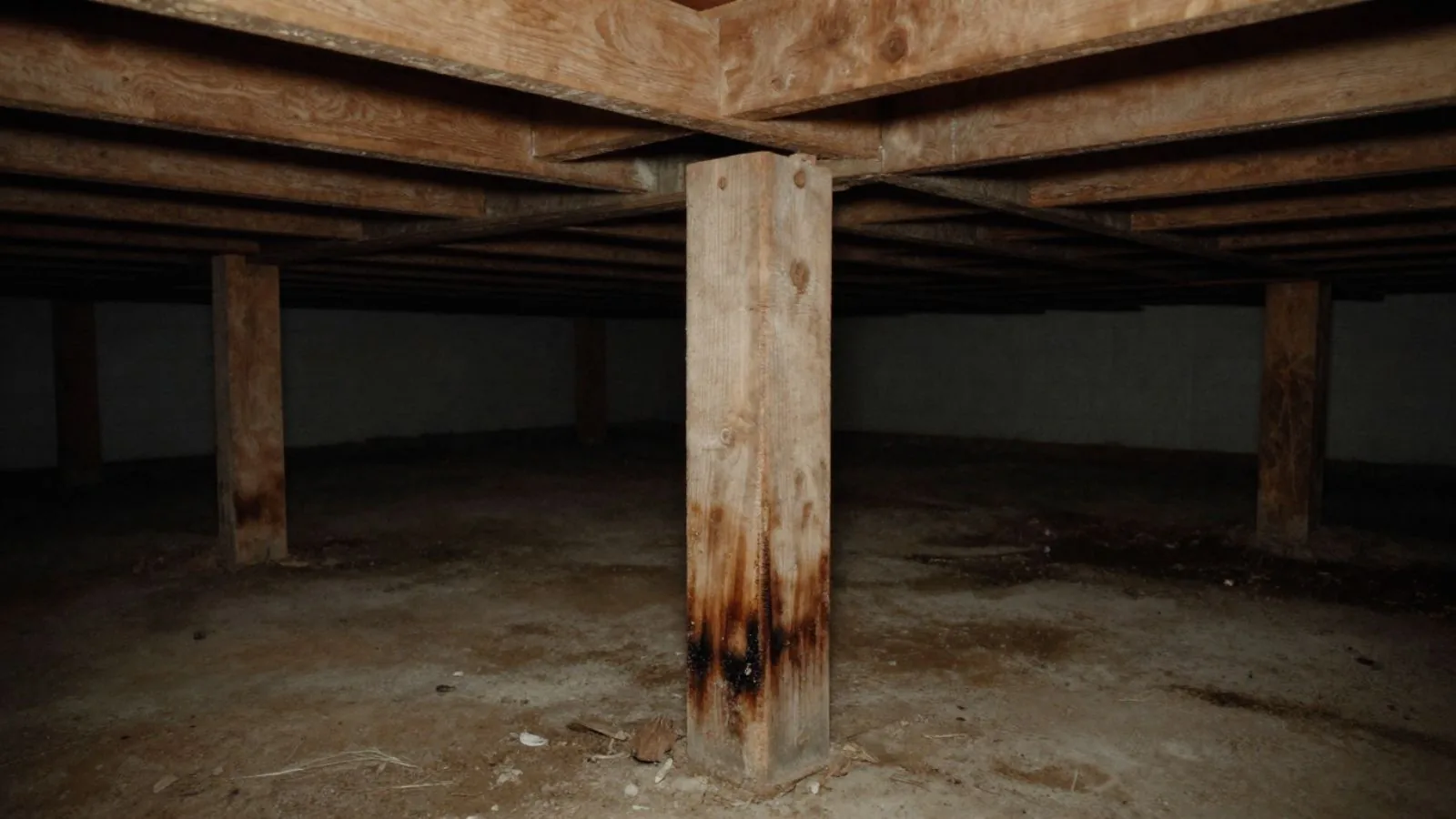
Crawl space water damage is moisture in the low void under a floor, including pooled water, saturated soil, and wet insulation, subfloor, and joists, and in Long Branch, NJ it often starts as groundwater or a leak that no one has looked at. A musty smell inside the house, floors that feel cold or soft, and sagging insulation are the usual first clues.
If you can see standing water, stay out of the space if there is any wiring or a gas line nearby, and call for extraction and drying.
How water gets into a crawl space
Water enters through foundation vents, cracked walls, a high water table after heavy rain, or a failed supply or drain line. After heavy rain a sump pit can fill, and soil beneath a poly vapor barrier can saturate. Plumbing leaks inside a crawl space drip onto soil or insulation for months before anyone notices.
Moisture then rises into the floor system. Wood framing takes on water, insulation sags, and humidity climbs, which creates the conditions for mold and rot.
| What you notice upstairs | What may be happening below | What crews check |
|---|---|---|
| Musty smell or humid rooms | Damp soil and high humidity under the floor | Humidity, vapor barrier, standing water |
| Cold or soft floors | Wet insulation and subfloor | Moisture meter readings in subfloor and joists |
| Sagging insulation | Insulation soaked by water or condensation | Insulation, ductwork, and pipe leaks |
| Visible mold on wood | Long-term moisture | Extent of growth and moisture source |
What crews do in a crawl space
The crew documents the space, extracts standing water with pumps, and removes wet insulation. Joists and subfloor are probed and measured with a moisture meter. Air movers and a dehumidifier dry the space, and a vapor barrier may be repaired or replaced. If the source is groundwater, the repair is a drainage or grading problem, and restoration dries but does not cure it.
Crawl space jobs often run longer than room-level drying because soil and wood hold moisture. If readings stay high, structural drying continues until framing is dry. Growth on joists and subfloor is covered under mold remediation.
Flooding and groundwater in Long Branch crawl spaces
Where a Long Branch home has a crawl space, heavy rain and tidal flooding can push water in through vents. The county hazard plan puts about 26% of the city inside the special flood hazard area, and low-lying spots near Branchport Avenue and the Manahassett Creek area collect runoff. A crawl space there can take on water even when the yard looks dry.
If the space flooded from outside, the water may qualify as contaminated, which changes the work. Compare with flood damage restoration. A basement, which is a full-height lower level, is handled separately under basement water damage.
Crawl space water does not fix itself. Call (732) 352-9660 and tell us whether you can see standing water or only smell dampness.
What drives the cost of crawl space water damage cleanup
- Water depth and sourceA plumbing leak is smaller than groundwater that returns with each storm.
- Space size and accessTight access slows extraction and removal.
- Insulation and vapor barrierWet insulation is removed and the barrier may be replaced.
- Wood damageRot or mold on joists changes the scope.
- Drying daysSoil and wood dry slowly, so monitoring runs longer.
Insurers usually cover sudden pipe failures but often exclude groundwater, seepage, and flood. Read your policy and ask your insurer how it treats water that entered from the ground.
Scope and price are explained before work starts. For your number, Call (732) 352-9660.
The U.S. Environmental Protection Agency guidance on mold and moisture says controlling moisture is the key to preventing mold, which is why crawl spaces are dried before they are closed up.
What to do before a crew arrives
- Do not enter a flooded crawl space, since it can hide wiring, ducts, and weak footing.
- Shut off the water source if you know where it is.
- Leave HVAC equipment alone if it sits in the water.
- Photograph what you can see from the access panel.
Crawl space questions from Long Branch homeowners
Is a damp crawl space a problem if I cannot see water?
It can be. High humidity and damp insulation can lead to mold and rot even without pooled water. A moisture reading in joists and subfloor shows whether the wood is wet.
Can you waterproof my crawl space?
Restoration dries the space and repairs what water damaged. Waterproofing, such as drainage systems or sump installation, is a separate trade. If groundwater is the source, ask a drainage contractor for the permanent fix.
Is it safe to go into a wet crawl space?
Not if wiring is wet, gas lines are present, or the space is tight. Standing water with an electrical hazard is a reason to call the utility first.
Do I need to replace the insulation?
Wet fiberglass and batting that sagged are usually removed. Rigid foam may be dried and reused. A crew checks each material.