
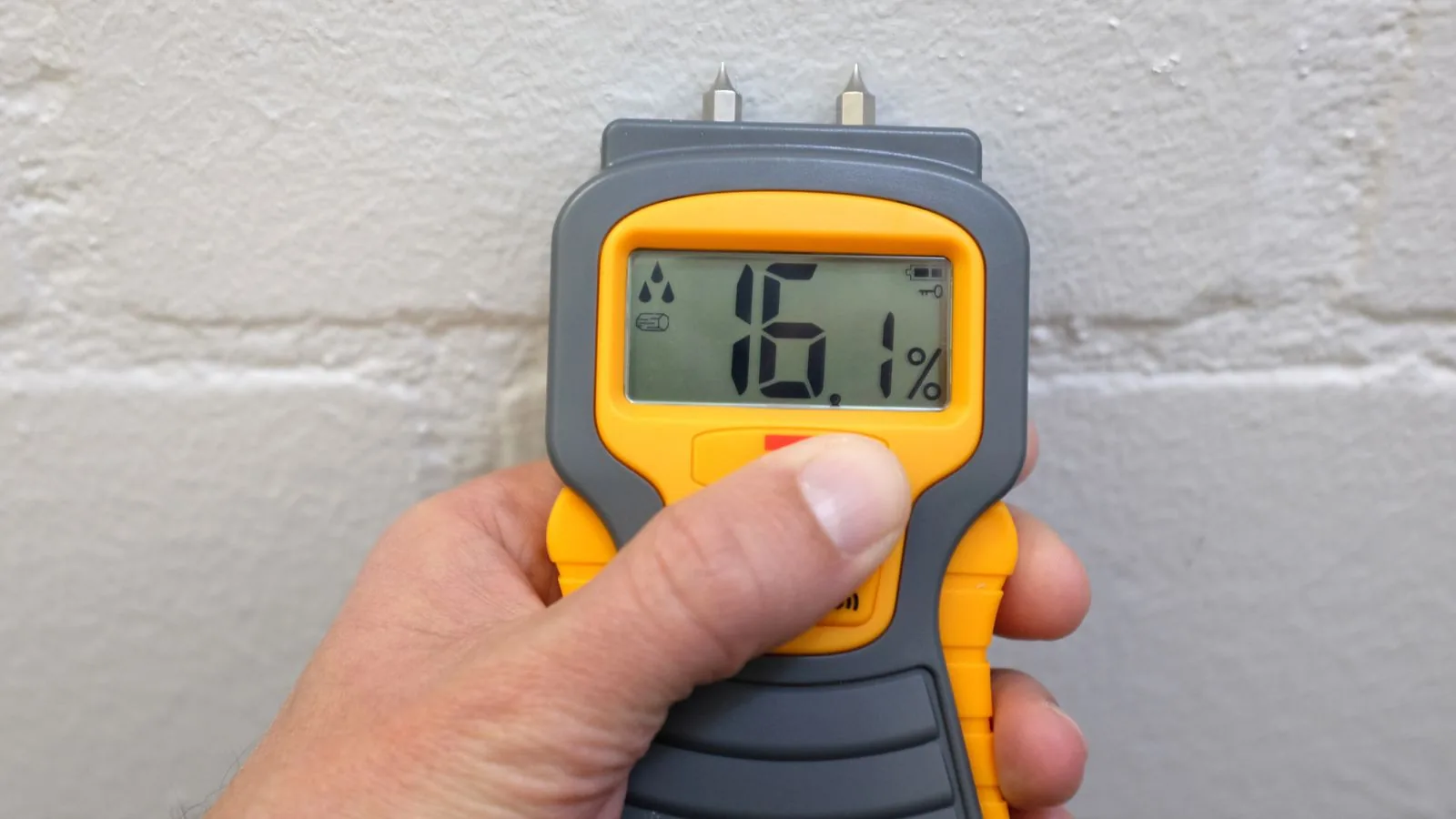
After water damage, a surface can look and feel dry while the material behind it is still wet. Moisture readings solve that problem. A meter measures how much water a material is holding, and a crew compares that number to a dry standard so that drying ends because the structure is dry, not because a calendar says so.
The tools behind the numbers
A pin meter reads moisture through two small probes pressed into wood or drywall. A pinless meter scans a surface with a sensor and reads moisture beneath it without leaving marks. A thermal camera shows temperature differences that often reveal wet areas, but it does not measure moisture on its own, so crews confirm with a meter.
A thermo-hygrometer measures air temperature and relative humidity. Those readings tell the crew how well the air can absorb water from wet materials, and they guide how equipment is set up.
What a dry number looks like
Readings vary by material and by meter scale, so no single number applies to everything. For wood, a pin meter on a wood scale commonly reads somewhere in the low teens as a percent when the wood is in equilibrium with a normal indoor space. Drywall is read on a different scale, and the practical approach is to compare wet areas to an unaffected area of the same material in the same house.
That reference reading is called the dry standard. Every material gets its own. A crew records the dry standard first, then tracks the wet area down toward it each visit.
| Material | How it is usually read | What the crew compares it to |
|---|---|---|
| Framing and subfloor wood | Pin meter, wood scale | An unaffected piece of the same wood |
| Drywall | Pinless or pin meter, gypsum scale | Dry drywall in an unaffected room |
| Concrete slab | Concrete scale or relative humidity test | A dry slab area in the same building |
| Indoor air | Thermo-hygrometer | Normal indoor humidity for the season |
How readings drive the drying plan
On the first visit a crew maps wet areas and records readings at set points. Equipment such as air movers and dehumidifiers is placed based on what the readings show, and the readings are taken again every day or so. Industry guidance for water damage restoration, published as the S500 standard, describes this cycle of measure, dry, and measure again.
When readings in wet materials match the dry standard, equipment can come out. If they stall, the crew checks for a hidden source, trapped water behind a baseboard, or insulation that needs to be opened. Our page on structural drying and dehumidification covers the equipment side.
Why readings protect you from mold and repeat damage
Closing a wall over wet framing is how mold starts. A documented reading that shows the structure at a dry standard is the best evidence that the work is finished. It also supports an insurance file, because it shows what was wet and when it dried.
Common mistakes when reading moisture
The most frequent error is trusting a single number. A reading taken on a painted wall near a window can differ from one taken in a closet, so crews take many readings and mark them on a sketch of the room. Another error is comparing readings across different meter scales. A number on a wood scale does not mean the same thing on a gypsum scale.
Surface finishes matter too. Metal foil insulation, tile, and dense paint can distort a pinless reading, so a second reading with a pin meter or from the other side of the wall is a sensible check.
When to call for readings
- A musty smell lingers after the surface looks dry.
- A floor or wall feels cool or damp to the touch days after a leak.
- You plan to close a wall or lay new flooring after water damage.
Why Long Branch air makes readings matter more
Long Branch sits between the Atlantic and the Shrewsbury River, and the humid shore air can slow drying in summer. A basement or a crawl space near the water can hold moisture longer than an inland room. The Monmouth County hazard plan notes that about 26% of the city's land lies in the special flood hazard area, which means many homes here sit close to the groundwater table.
Moisture can also wick up through concrete after a flood. Homes in Monmouth Beach and Oceanport face the same salt-air humidity, so readings and a final dry confirmation are worth asking about before any wall is closed.
What to ask a crew about readings
- Which dry standard did you record, and for which materials?
- How often will you re-read the wet areas?
- Can I see the numbers on each visit and at the end?
- What happens if a reading stops dropping?
A clear answer to those four questions shows a crew that measures its work. If you want help on the first day, the page on water extraction describes what happens before drying begins.
Moisture reading questions
What moisture reading is considered dry?
It depends on the material and the meter scale. Crews record a dry standard from an unaffected area of the same material and dry the wet area down to that reading. For wood, the target is usually in the low teens as a percent.
Can I check moisture myself with a home meter?
A consumer meter can show relative differences between a wet and dry spot, but readings vary by material and scale. For a damage claim or a closed wall, ask for a professional log.
Does a thermal camera replace a moisture meter?
No. A thermal camera shows temperature patterns that often point to wet areas, but a moisture meter confirms the water content of the material.
Are Long Branch basements slower to dry?
Often, yes. Humid shore air and a high water table can slow drying in lower levels, so readings should be repeated until the concrete and framing reach their dry standard.