
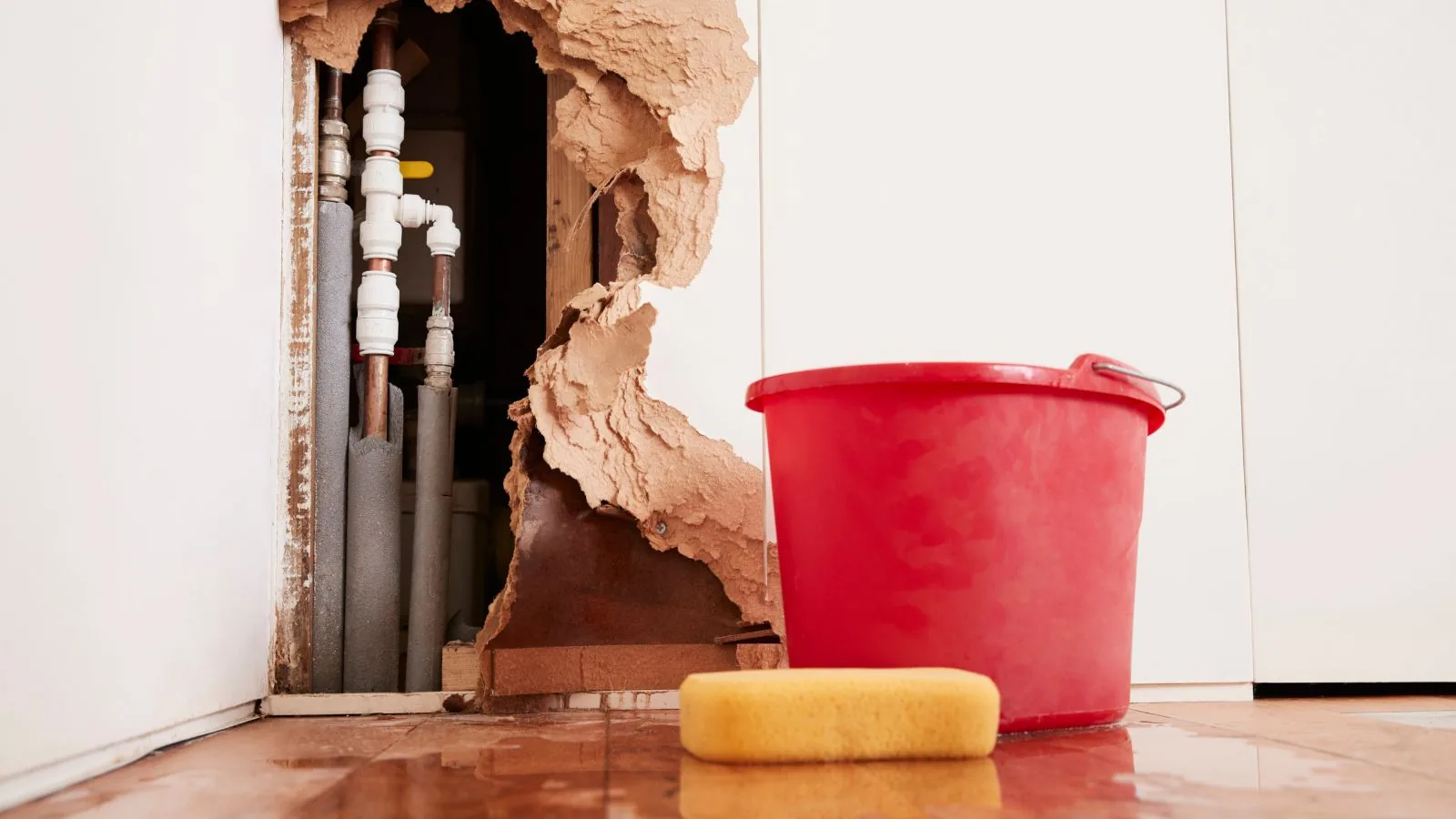
When a pipe lets go, every minute the water runs adds to the damage. The fastest way to stop it is the main shut-off valve, the one valve that cuts water to the whole house. Most people never touch it until the day it matters, and that day is a bad time to learn where it is.
Where the main shut-off usually is
The water line enters the house through a foundation wall or slab, then runs to a meter and a shut-off valve. Look in a basement or utility room near the front wall, close to the street side. In homes with slab foundations, the valve may be in a garage, a closet, or a utility room, often near the water heater.
Many homes also have a valve at the water meter. In some areas, a second valve near the curb belongs to the water utility. Do not operate the curb stop without the utility's guidance.
Know your valve type
| Valve type | How to recognize it | How to close it |
|---|---|---|
| Gate valve | Round wheel handle | Turn clockwise until it stops, gently |
| Ball valve | Straight lever handle | Turn the lever a quarter turn so it crosses the pipe |
| Meter valve | Small valve on the meter | Close it only if it is yours to operate, and ask your utility |
Gate valves can corrode and stick. Turn them gently and never force them. A ball valve is easier and usually works with one motion.
What to do in an emergency
- Close the main shut-off valve by turning it fully.
- Open a faucet at the lowest level of the house to drain the pipes.
- Turn off the water heater, since an empty tank can damage the element or burner.
- Turn off power to wet areas only if you can reach the panel safely and dry.
- Photograph the damage and the source.
- Call for water removal.
If the pipe is cracked or the valve will not close, shut the water at the street through your utility and call a plumber. The cleanup is what comes next, and a crew can begin water extraction while the repair is arranged.
Practice and label before there is a problem
Close the valve once a year to make sure it moves, then open it again. Tag it with a bright label. Make sure everyone in the household knows where it is, including older children and anyone who looks after the house. Check that nothing is stacked in front of it.
If the valve is stuck or leaks around the handle, have a plumber replace it. A modern ball valve is a small upgrade that is easy to operate in an emergency.
If the valve will not turn or leaks
Old valves seize. Never use a wrench with extra leverage on a stuck gate valve, because a snapped stem can create a worse flood. If the handle will not move with steady hand pressure, shut the water at the street through your utility and call a plumber. Keep the plumber's number with the valve tag so you are not searching during a crisis.
A slow drip around the valve stem is a sign it needs service. Tighten the packing nut a quarter turn if you are comfortable, and if the drip continues, schedule a replacement.
Other shut-off points worth knowing
- Individual fixture valves under sinks and behind toilets.
- The washing machine hot and cold supply valves.
- The valve feeding the water heater.
- Outdoor hose bib shut-offs, which should be closed before winter.
Seasonal reminders
Before leaving for a winter trip, shut the main and drain the lines if the house will sit empty. Before a summer vacation, close the main to protect against a failed hose while you are away. A quick walk around to check valves twice a year is a good habit to build.
Water service in Long Branch
Water in Long Branch is supplied by New Jersey American Water, which serves the city through its Coastal North system. If you have a leak between the street and your meter, or you cannot find a valve, the utility is the first call for the street-side equipment. The city's sewer system is separate and is managed by the Long Branch Sewerage Authority at 150 Joline Avenue.
Replacing a main line or valve generally needs a plumber, and in some cases a permit through Long Branch Building and Development at City Hall, 344 Broadway. Owners in West Long Branch and Monmouth Beach should confirm their local permit contacts with their own boroughs.
After the water is off
Stopping the flow is the first step, not the last. Water already in the house keeps spreading into drywall and flooring. Quick removal and drying protect the structure and help with a claim. Our page on burst pipe water damage covers what happens next.
Water main questions
Where is the main water shut-off valve in most homes?
Usually where the water line enters the house, near the front wall in a basement or utility room, often close to the water meter or the water heater.
Should I shut off the water at the curb?
Not on your own. The curb stop usually belongs to the utility. Close the interior main first, and call your water utility if the leak is on the street side.
Do I need to turn off the water heater too?
Yes in an emergency. Draining pipes can leave the tank without enough water, and an empty tank can damage the heater.
Who supplies water to Long Branch homes?
New Jersey American Water serves Long Branch. Contact it for street-side valves or leaks on its side of the meter.