
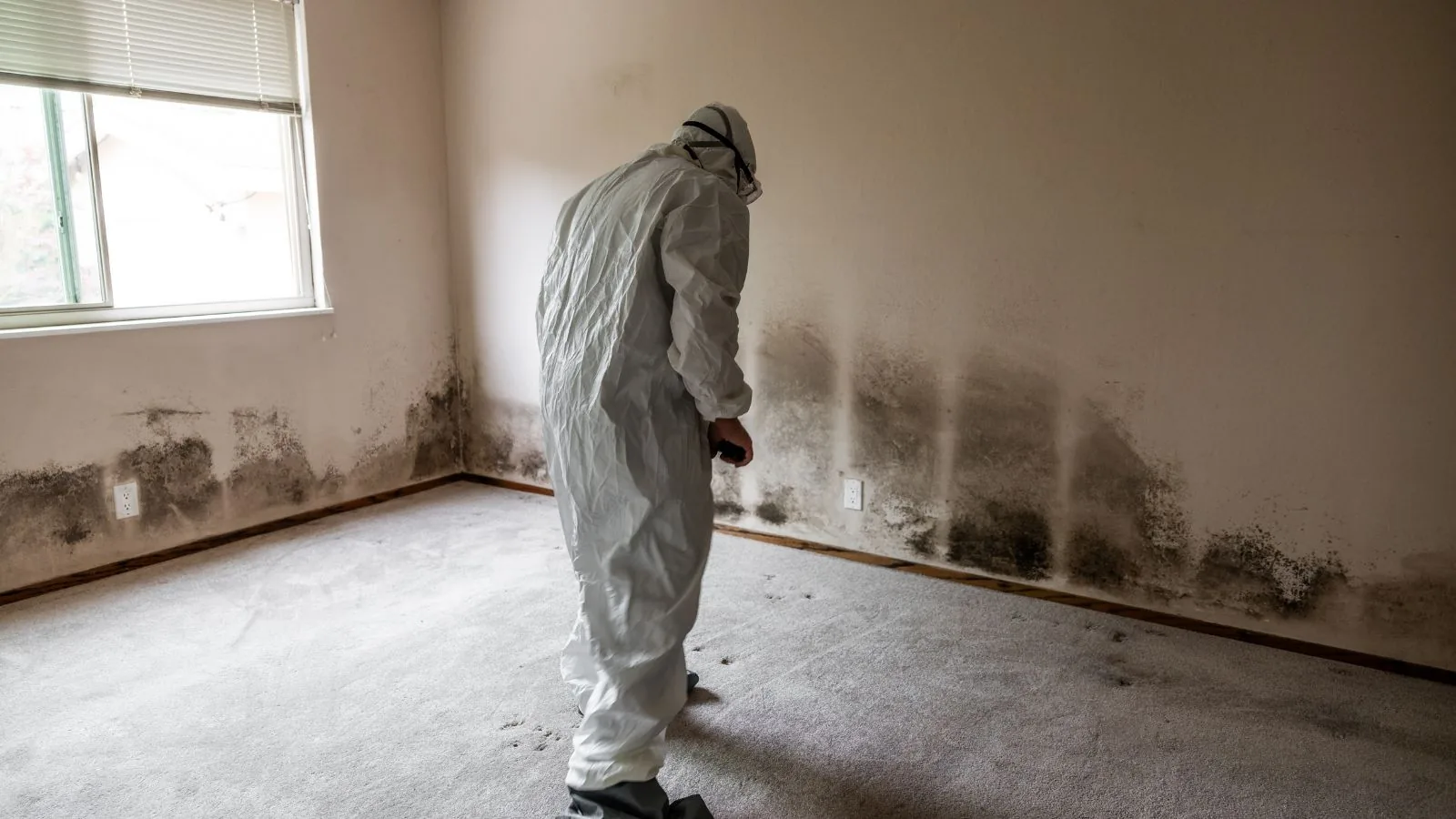
Bathrooms are the easiest room in a house for mold to colonize. They are warm, they hold humidity after every shower, and many have poor ventilation. Eliminating mold takes two jobs done in order: remove what is growing, then remove the moisture that fed it.
Decide if this is a cleaning job
The EPA's guidance for homeowners says that if the moldy area is smaller than about ten square feet, a homeowner can generally handle the cleanup. Larger areas, mold that returns, mold after sewage or flood water, or growth inside walls call for a professional. Hard, nonporous surfaces such as tile, glass, and a tub can usually be cleaned. Porous materials such as drywall, ceiling tiles, and caulk that has gone black may need to be replaced.
How to clean mold from hard surfaces
- Open a window or run the fan and wear gloves, eye protection, and a mask rated for small particles.
- Mix detergent and water and scrub the moldy surface until the growth is gone.
- Rinse with clean water and dry the area completely with a towel.
- Replace badly stained caulk instead of scrubbing it, since mold lives under the surface.
- Throw away cleaning rags and brushes you cannot wash.
Never mix bleach with ammonia or other cleaners, since the fumes can be dangerous. The EPA does not recommend routine bleach use for mold. Detergent and water work for most surfaces, and drying is what keeps it from coming back.
| Surface | Can it be cleaned? | Usual approach |
|---|---|---|
| Tile and glass | Yes | Detergent, scrub, rinse, dry |
| Grout | Often | Scrub, then seal once dry |
| Caulk | Rarely for lasting results | Cut out and replace |
| Painted drywall with light growth | Sometimes | Clean and dry, then monitor |
| Soft or crumbling drywall | No | Remove the damaged section |
Fix the moisture or the mold returns
Run the exhaust fan during every shower and for at least twenty minutes afterward. Check that it vents outside, not into the attic. Wipe down wet surfaces, fix leaking faucets, and look for slow leaks around the tub, toilet base, and under the vanity.
If a wall stays damp or a ceiling stains from above, the cause may be a hidden leak. Hidden moisture needs to be found and dried, which is the work of structural drying and dehumidification. Large or recurring growth belongs with a team that does mold remediation.
Prevention that works for bathrooms
Ventilation is the biggest lever. A fan rated for the size of the room, ducted outside, and run during and after showers removes most of the moisture before it settles. If the fan is old and weak, a piece of tissue held to the grille will fall away instead of sticking. That is a sign it should be replaced.
Squeegee shower walls after use, hang towels so they dry, and leave the shower curtain open. Wash bath mats weekly and keep them off the floor to dry. Reseal grout once a year in heavy-use showers. Each habit takes a minute, and together they keep the bathroom dry enough that mold has little to work with.
A quick monthly check
- Look at the ceiling above the shower for stains or peeling paint.
- Press gently on the wall near the tub for soft spots.
- Check under the vanity for dampness or a musty smell.
- Look around the toilet base for staining on the floor.
Cleaning supplies and what to avoid
A scrub brush, a spray bottle of detergent solution, disposable gloves, and dry towels are enough for most small jobs. Skip abrasive tools on grout that is already crumbling, and do not use a power washer indoors. Throw out sponges used on mold instead of reusing them elsewhere in the house.
Long Branch conditions that feed bathroom mold
The shore humidity in Long Branch keeps indoor moisture higher in summer, and many homes near the ocean and the Shrewsbury River have older bathrooms with weak exhaust. The city issues permits through Building and Development at City Hall, 344 Broadway, if you plan to replace a fan duct or open a wall.
New Jersey Department of Health guidance notes that the state has no certification program for companies that do mold work, so homeowners should ask for references and a written scope. Residents in West Long Branch and Little Silver have the same advice, with permits through their own borough offices.
When to stop and call a professional
- The mold covers more than about ten square feet.
- It keeps returning after you clean and dry it.
- The wall behind it is soft or stained from above.
- A sewage or flood event caused it.
- Someone in the home has asthma or a weak immune system.
Bathroom mold questions
What kills mold in a bathroom for good?
Nothing kills it permanently if the room stays damp. Clean with detergent and water, dry completely, and fix ventilation and leaks so the moisture is gone.
Is bleach the best way to remove bathroom mold?
The EPA does not recommend routine bleach use. Detergent and water remove surface mold, and bleach can damage materials and should never be mixed with ammonia.
Should I replace moldy caulk or clean it?
Replace it when it is stained through. Mold grows beneath the surface of old caulk, and scrubbing rarely removes it fully.
Does the state certify mold contractors in New Jersey?
No. The New Jersey Department of Health says the state has no certification program for companies that perform mold services, so ask for references and a written scope.