
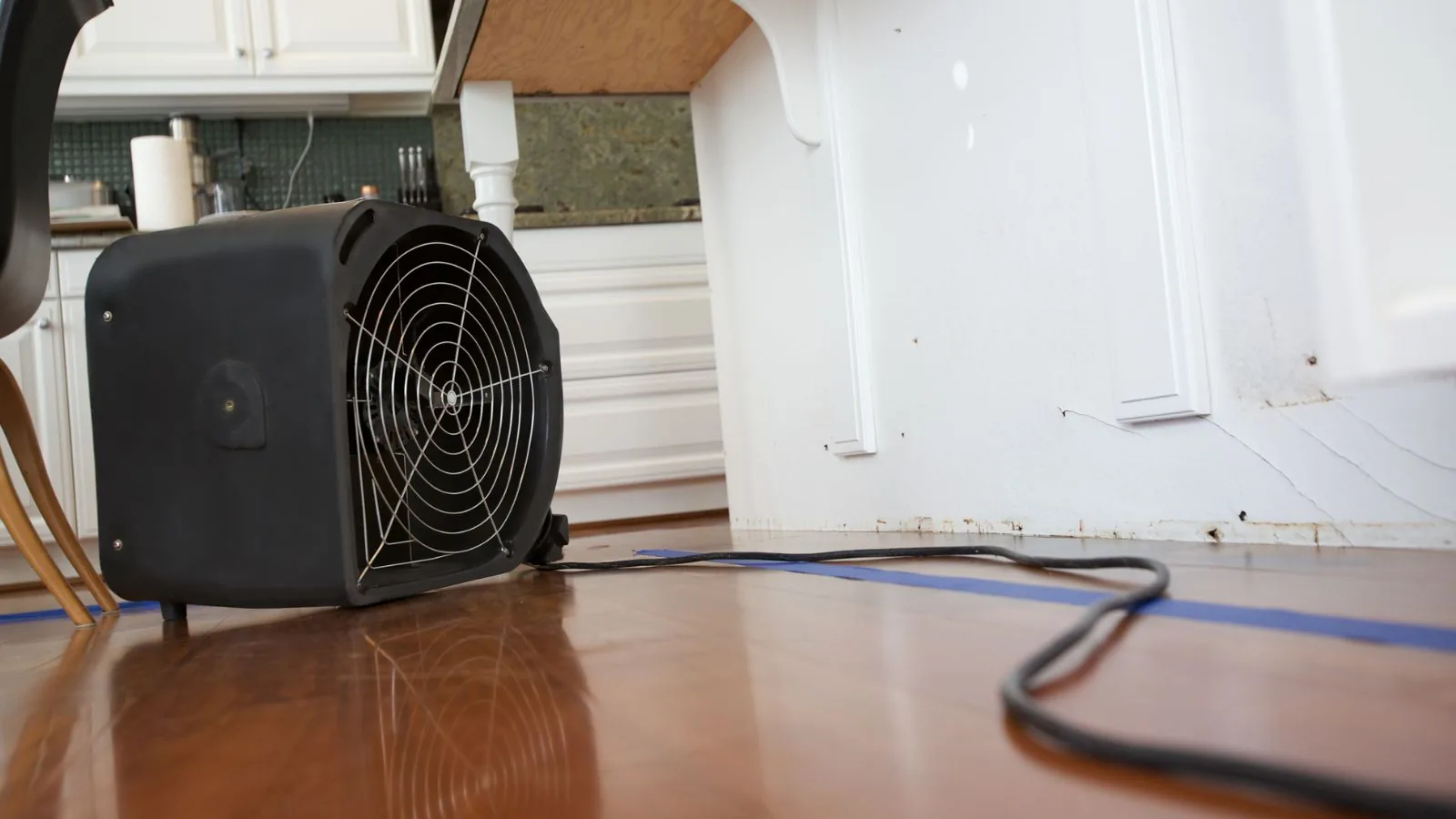
Everyone wants the same answer to this question, and the honest one is a range. A small clean-water leak in a bathroom may dry in a few days. A flooded finished basement can take a week or more. The drying clock depends on what got wet, how much, and how fast the work started.
What sets the timeline
- How long the materials were wet before drying began.
- The material itself: drywall dries faster than hardwood, and concrete is slowest.
- How much water entered and how far it spread.
- Indoor temperature and humidity.
- Whether insulation or hidden cavities are involved.
- Whether equipment is sized and placed well.
Starting extraction and drying within a day or so helps. Water that sits for days soaks deeper and takes longer to remove.
Typical ranges by material
| Material | Typical drying time with equipment | Notes |
|---|---|---|
| Drywall and insulation | A few days, if dryable | Often removed if saturated |
| Carpet and pad | A few days, or replaced | Pad is often discarded |
| Hardwood flooring | One to several weeks | Slow drying avoids cupping and cracking |
| Framing and subfloor | Several days to a week or more | Confirm with moisture readings |
| Concrete slab | Weeks to months to reach full dryness | Moisture can wick for a long time |
These are general ranges, not promises. Readings decide the end date, not the calendar.
How the process works
Air movers circulate air across wet surfaces and dehumidifiers pull water out of the air. A crew returns every day or so to read moisture levels and adjust equipment. The published S500 standard describes this cycle, and the work ends when materials reach their dry standard. Read more about structural drying and how readings are taken.
Running fans from a hardware store does not usually replicate this. Without dehumidification and monitoring, moisture can stay in the structure after the surface feels dry.
What you can do to help
- Keep doors and windows closed while equipment runs, unless the crew says otherwise.
- Keep equipment plugged in and do not turn it off to save noise.
- Remove belongings from wet rooms.
- Keep a log of dates, readings, and conversations.
What a daily drying visit includes
Each visit starts with readings in the same spots as before. If numbers are falling, the crew keeps the setup. If a spot has stalled, they move air movers, open a wall cavity, or add dehumidification. They also check the air itself, since the goal is dry materials in a room with normal humidity.
Equipment is noisy and uses power, which is a real inconvenience. Knowing the plan and the expected number of days makes it easier to live with, so ask for an estimate of how many visits to expect.
Why a surface that feels dry is not dry
Water moves into materials and hides. Drywall can feel dry on the face while the paper backing and the insulation behind it stay wet. Wood floors can feel firm while the subfloor under them holds water. A damp stud can keep a wall cavity humid for weeks. That is why the final reading, not the touch test, closes the job.
If a project stalls, ask the crew whether there is a hidden source, trapped water under a layer such as a vapor barrier, or a material that needs to be removed to let the structure dry. A stalled reading is information, and a good crew treats it that way.
Signs drying is going well, and signs it is not
Good signs include falling readings, a drop in room humidity, and a smell that fades. Poor signs include readings that stay flat for two visits, a damp smell that returns, or water stains that reappear after drying. If you see those, ask the crew to look for a hidden source or trapped moisture before finishes are replaced.
What to do while equipment runs
- Keep doors and windows closed unless the crew says otherwise.
- Leave air movers and dehumidifiers plugged in.
- Report a tripped breaker, a burning smell, or new damp spots.
Why shore weather changes drying time in Long Branch
Long Branch sits between the Atlantic and the Shrewsbury River, and summer shore humidity can slow evaporation. Basements near the water also sit close to the water table, and concrete can keep releasing moisture long after the visible water is gone. The Monmouth County hazard plan notes that about 26% of Long Branch land lies in the special flood hazard area.
A flooded lower level in Long Branch, Oceanport, or Little Silver may take longer than the same leak inland. Ask the crew to explain the plan for dehumidification and how it will confirm that concrete and framing are dry before finishes go back.
Why rushing the finish is costly
Closing a wall or laying new flooring over damp material invites mold and warping. Waiting for a clear dry reading before rebuilding is cheaper than redoing it. If you suspect mold already, see mold remediation.
Drying time questions
How long does water damage take to dry on average?
Many rooms dry in about three to five days with professional equipment. Hardwood, plaster, and concrete take longer, and a large or old loss can take more than a week.
Can I speed up drying with fans alone?
Fans move air, but without dehumidification the moisture can settle back into materials. A crew uses both and checks readings.
How do I know the house is dry?
Moisture readings in wet materials match readings from unaffected areas of the same material. Ask the crew to show you the numbers.
Does humidity near the shore slow drying in Long Branch?
It can. Humid air holds more water, so dehumidifiers are essential, especially in summer and in basements near the water.